Marco Carrera—Miraijin
The HummingbirdMarco Carrera—Miraijin is a grandfather-granddaughter relationship that becomes the organizing purpose of Marco’s later life. After Adele’s death, he understands raising Miraijin not simply as an obligation of care but as the mission that gives meaning to his past suffering; at his own death, their intimate gesture becomes the final expression of that bond.
From care to purpose
While Adele is alive, she repeatedly insists that Miraijin will be the new human being and that humanity will begin again through her. Marco echoes the idea, but the narrative explains that he initially does so partly out of indulgence toward his daughter, much as he had once played along with her belief in a thread attached to her back. He does not yet fully accept the claim as his own conviction.
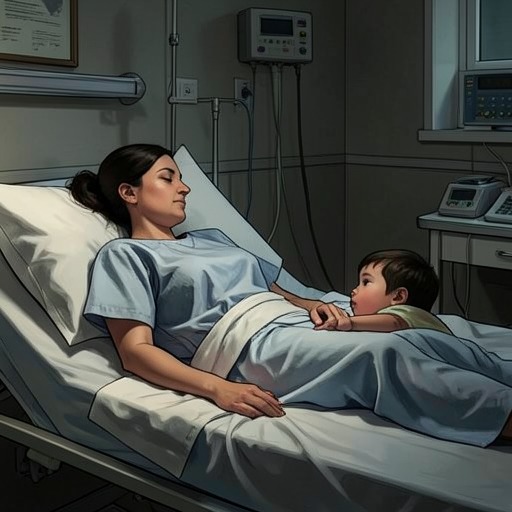
After Adele dies, Marco is left to care for Miraijin in the crater of his loss. Following Dr. Carradori’s advice, he lives wildly for a time, concerned above all with looking after the child and seizing what remains of his own life. The arrangement is imperfect: he even plays while Miraijin sleeps in a hammock. Yet this period of unsteady, practical caretaking helps him reach the understanding that his earlier life has not been merely a sequence of blows without meaning.
The mission he chooses
The change comes into focus after Marco gives up the extraordinary poker winnings he has won in a brutal duel with his friend Dami Tamburini. In the account of his realization, this renunciation becomes the moment when he can finally ask why he has endured so much. He gathers losses and upheavals that had seemed disconnected—including escaping a plane crash, losing his sister, a terrible divorce, bringing his father’s life to an end, and burying his twenty-two-year-old daughter—and interprets them through Miraijin. His answer is that he has been granted the painful privilege of raising the new human being.
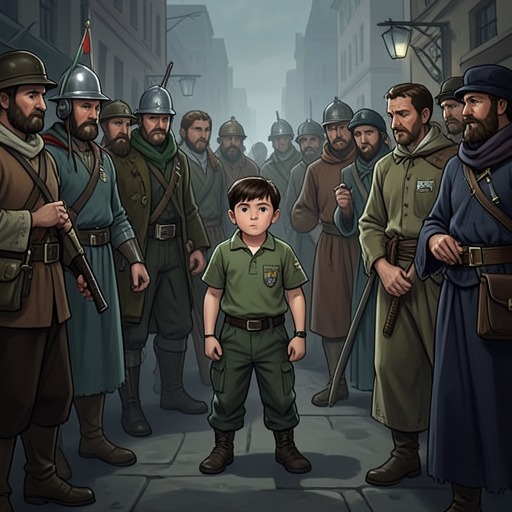
That belief recasts the relationship from family care into a stated mission. Marco’s work, which he has pursued for thirty-five years, remains part of a life he values; he does not truly wish to abandon it for imagined luxuries or for a household of servants. What makes his life meaningful, as he explains to Luisa Lattes, is its purpose: delivering the future human being to the world by raising Miraijin. The child is not a distraction from his life’s meaning but the person through whom he understands it.
A changed order of love
Marco tells Luisa that this mission gives meaning to what he has had and has lacked, including Luisa herself. He recalls loving her for forty years and thinking of her as the first and last thought of each day, but says that this is no longer the case: his first thought, his last, and all the thoughts between belong to Miraijin. He calls this the only way he can now live and ends the letter as his last to Luisa. His devotion to the child therefore has a consequence beyond everyday guardianship: it determines the shape of his emotional commitments and closes a long correspondence with the woman he loved.
Marco’s language also holds a tension between the child he cares for and the future she is meant to represent. He calls Miraijin an eight-year-old girl sleeping under his roof, then imagines that she will become a woman and the new human being. The mission does not erase her present identity; it joins the concrete child in his care to Adele’s far-reaching hope for humanity. His resolve to keep changes from ruining that hope grows out of a life in which sudden upheavals have repeatedly forced him into another existence.
The final act of trust
At the end, Marco’s relationship with Miraijin is present in physical actions rather than a declaration. After turning to Rodrigo and thanking him, Marco reaches for the red tap, opens it, and rests his hand again on his thigh. In pain, he looks at the five people before him, then raises his eyes to Miraijin and invites her to bend close. He looks at her for the last time and puts his hand into her hair; she meets his gaze with a courageous, reminiscent expression.
As the anesthetic takes effect, Miraijin changes the position of his hand. Instead of leaving him to make the painful effort of opening the potassium branch himself, she gently replaces his right hand with her left. The two right hands are joined between the little and ring fingers, with the twins touching—their shared “strong point.” The carefully described adjustment makes her participation in his final moment both tender and practical: she answers his invitation, eases his pain, and helps complete the act he has chosen.
Meaning within Marco’s story
Marco’s conviction that Miraijin is the new human being becomes fully his only after Adele’s death and his renunciation of the poker winnings. The relationship thus gathers together the book’s recurring pattern of stillness broken by sudden change: Marco has often endured painful transitions without knowing why, but in caring for Miraijin he finds an answer that lets him interpret endurance as purpose. That interpretation does not undo his losses. It gives him a reason to continue through them and a responsibility that outlasts the daughter who first named it.
The final handclasp brings that responsibility to an intimate close. Marco imagines leaving this child to the world and, amid his final thoughts of Irene, Adele, and his parents, asks whether they are proud of him. The question places his care for Miraijin within the family history he has carried; the act of entrusting her to the world is at once his farewell and the completion of the mission he believed had been given to him.